AI in Supply Chain Management: The Ultimate Guide to Smarter & Faster Operations
Introduction
The supply chains of the present have evolved over the decades. Today, as businesses strive to extend their reach in global markets, customers are demanding more than ever, and business disruptions occur frequently, supply chains are becoming very complex. From anticipating demand, managing inventory and stock to moving goods, warehousing, and ensuring the final delivery of the products, all processes need to be swift, precise, and provide decisions in real-time.
Traditional ways of managing supply chains have to rely heavily on past data and manual work, making it challenging to address changing circumstances efficiently.
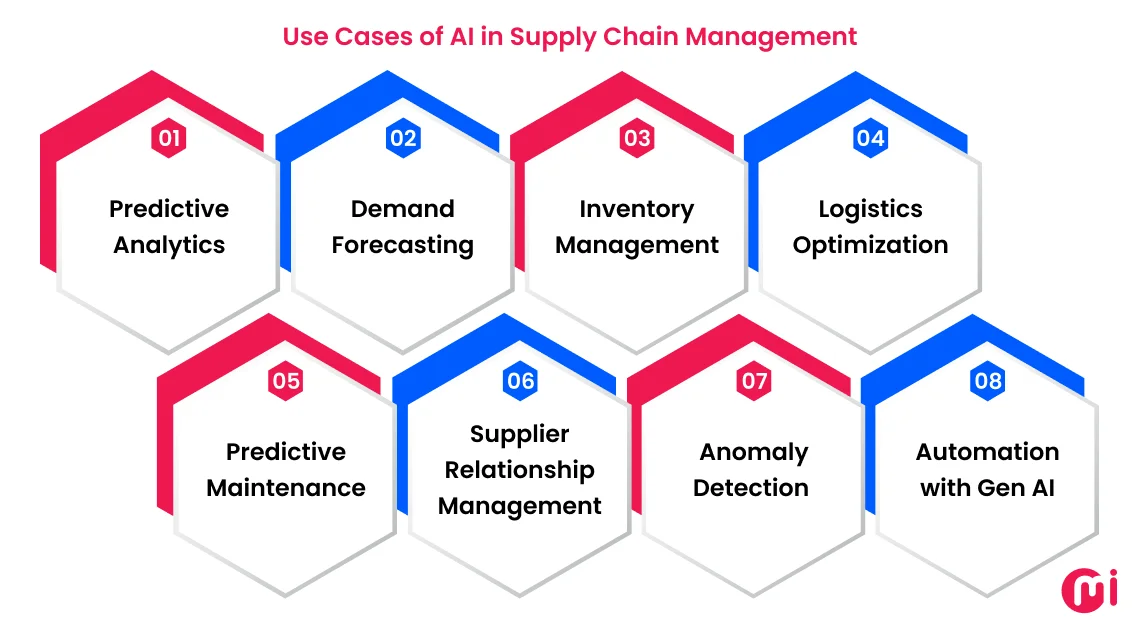
It's here where Artificial Intelligence is revolutionizing the sector. Leveraging machine learning, predictive modeling, automation, and real-time data handling, AI provides businesses with opportunities to optimize all operations, cut costs, enhance forecast accuracy and strengthen supply chain resilience. Regardless of the business – be it a manufacturer, retailer, logistics company, or eCommerce entity – leveraging AI solutions for supply chain management can boost efficiency and create a crucial edge over the competition. Within this detailed tutorial, we'll discuss how AI is impacting the world of supply chain management, the many advantages it offers, actual real-world applications, implementation steps, hurdles, and what you need to know regarding upcoming trends.
What Is AI in Supply Chain Management?
Artificial Intelligence In Supply Chain Management The application of AI technologies, such as machine learning, computer vision, predictive analytics, and natural language processing, to supply chain management.
Instead of utilizing old sales data reports and manual strategies, AI leverages Big Data for supply chain management, learning from all supply chain processes to understand demand trends and to suggest smart supply chain decisions.
Businesses investing in professional AI Development Services can build intelligent supply chain solutions tailored to their operational requirements while improving efficiency, scalability, and decision-making.
Why AI Is Transforming Supply Chain Management
Global supply chains generate enormous amounts of data every day. AI helps organizations convert this data into actionable insights.
Improved Decision-Making
AI analyzes data from multiple sources simultaneously, enabling businesses to make faster and more accurate operational decisions.
Better Demand Forecasting
Machine learning models identify seasonal trends, customer behavior, and market fluctuations to forecast demand with greater precision.
Challenges of Implementing AI in Supply Chain Management
While AI offers significant advantages, successful implementation requires careful planning and the right technology strategy. Businesses should understand the common challenges before beginning their AI transformation journey.
Data Quality and Availability
AI systems rely on accurate, complete, and up-to-date data. Inconsistent or outdated information from multiple systems can reduce the effectiveness of AI models and lead to inaccurate predictions.
Integration with Legacy Systems
Many organizations still operate on older ERP and warehouse management systems. Integrating AI solutions with existing infrastructure can require additional planning and customization to ensure seamless communication between platforms.
Initial Investment
Implementing AI involves costs related to software development, cloud infrastructure, employee training, and system integration. However, these investments often deliver long-term savings through improved efficiency and reduced operational costs.
Change Management
Introducing AI changes the way employees work. Organizations need proper training programs and clear communication to encourage adoption and help teams understand how AI supports—not replaces—their daily responsibilities.
Cybersecurity and Data Privacy
Supply chain systems process sensitive business and customer information. Businesses must implement strong security measures, encrypted communications, access controls, and compliance with industry regulations to protect valuable data.
AI vs Traditional Supply Chain Management
Understanding the difference between traditional and AI-powered supply chains highlights why organizations are rapidly adopting intelligent technologies.
| Traditional Supply Chain | AI-Powered Supply Chain |
|---|---|
| Manual decision-making | Automated, data-driven decisions |
| Historical reporting | Real-time predictive analytics |
| Reactive problem-solving | Proactive risk management |
| Limited visibility | End-to-end operational visibility |
| Manual inventory planning | Intelligent inventory optimization |
| Static forecasting | Continuous demand prediction |
| Higher operational costs | Optimized resource utilization |
AI enables organizations to move from reactive operations to proactive, intelligent supply chain management.
Best Practices for Successful AI Implementation
Businesses can maximize the value of AI by following proven implementation strategies.
Define Clear Business Objectives
Identify measurable goals such as reducing inventory costs, improving delivery times, increasing forecast accuracy, or enhancing warehouse productivity before implementing AI solutions.
Start with High-Impact Use Cases
Instead of transforming the entire supply chain at once, begin with one or two areas where AI can deliver immediate business value, such as demand forecasting or inventory optimization.
Build a Strong Data Foundation
Ensure that operational data is accurate, organized, and consistently updated. High-quality data improves the reliability of AI models and supports better decision-making.
Monitor AI Performance Continuously
AI systems should be evaluated regularly using performance metrics such as forecast accuracy, order fulfillment rates, inventory turnover, and delivery performance.
Combine Human Expertise with AI
AI provides recommendations based on data, while experienced professionals contribute strategic judgment and industry knowledge. Combining both leads to better business outcomes.
Measuring the ROI of AI in Supply Chain Management
Before investing in AI, organizations should define key performance indicators (KPIs) to measure success.
Common metrics include:
- Reduced inventory holding costs
- Improved demand forecast accuracy
- Faster order processing
- Lower transportation expenses
- Increased warehouse productivity
- Reduced stockouts
- Shorter delivery times
- Higher customer satisfaction
- Improved supplier performance
Monitoring these metrics helps businesses evaluate the long-term impact of AI initiatives and identify opportunities for continuous improvement.
Future Trends in AI-Powered Supply Chains
Artificial intelligence continues to evolve, introducing new possibilities for smarter and more resilient supply chains.
Autonomous Supply Chains
Future supply chains will increasingly automate planning, procurement, inventory management, and logistics with minimal human intervention, enabling faster and more accurate decision-making.
Generative AI for Planning
Generative AI can help businesses simulate multiple supply chain scenarios, generate strategic recommendations, and support faster planning for changing market conditions.
Digital Twins
Digital twins create virtual representations of physical supply chains, allowing organizations to simulate disruptions, test operational strategies, and optimize processes before implementing changes in the real world.
Hyperautomation
By combining AI, Robotic Process Automation (RPA), IoT, and advanced analytics, businesses can automate complex workflows across procurement, manufacturing, warehousing, and logistics.
Sustainable Supply Chains
AI supports sustainability initiatives by optimizing transportation routes, reducing fuel consumption, minimizing waste, and improving resource utilization, helping organizations achieve environmental goals alongside operational efficiency.
Choosing the Right AI Development Partner
Selecting an experienced technology partner is essential for building successful AI-powered supply chain solutions. A knowledgeable development team can help organizations identify the most valuable AI use cases, integrate intelligent technologies with existing systems, and ensure scalable implementation.
When evaluating an AI development partner, consider:
- Experience in AI and machine learning projects
- Supply chain domain expertise
- Custom software development capabilities
- Data engineering and analytics expertise
- Cloud deployment experience
- Security and compliance practices
- Long-term support and maintenance services
Partnering with a company that provides Custom Software Development Services allows businesses to build intelligent supply chain solutions tailored to their operational requirements while ensuring flexibility for future growth.
Frequently Asked Questions (FAQs)
1.What is AI in Supply Chain Management?
AI in Supply Chain Management refers to the use of artificial intelligence technologies to automate, optimize, and improve supply chain operations such as forecasting, inventory management, logistics, procurement, and warehouse management.
2.How does AI improve demand forecasting?
AI analyzes historical sales data, customer behavior, seasonal trends, market conditions, and external factors to generate more accurate demand forecasts, helping businesses reduce inventory costs and improve product availability.
3.Which industries benefit from AI-powered supply chains?
Industries including manufacturing, retail, healthcare, pharmaceuticals, automotive, logistics, food and beverage, consumer electronics, and eCommerce can all benefit from AI-driven supply chain optimization.
4.Is AI suitable for small and medium-sized businesses?
Yes. Many AI-powered cloud solutions are scalable and cost-effective, enabling small and medium-sized businesses to improve efficiency without significant infrastructure investments.
5.What are the biggest advantages of AI in supply chain management?
The primary benefits include improved forecasting accuracy, lower operational costs, enhanced visibility, faster decision-making, optimized inventory, reduced delivery times, better customer experiences, and increased supply chain resilience.
Conclusion
Artificial Intelligence is redefining supply chain management by enabling organizations to make faster, smarter, and more informed decisions. From demand forecasting and inventory optimization to warehouse automation and predictive maintenance, AI empowers businesses to improve efficiency, reduce costs, and respond proactively to changing market conditions.
While implementing AI requires careful planning, quality data, and the right technology strategy, the long-term benefits far outweigh the initial investment. Organizations that embrace AI-driven supply chain solutions gain greater visibility, stronger operational resilience, and the flexibility needed to compete in an increasingly dynamic global marketplace.
As technologies such as machine learning, IoT, digital twins, and generative AI continue to evolve, intelligent supply chains will become the standard rather than the exception. Businesses that invest in AI today will be better positioned to optimize operations, enhance customer satisfaction, and achieve sustainable growth in the years ahead.